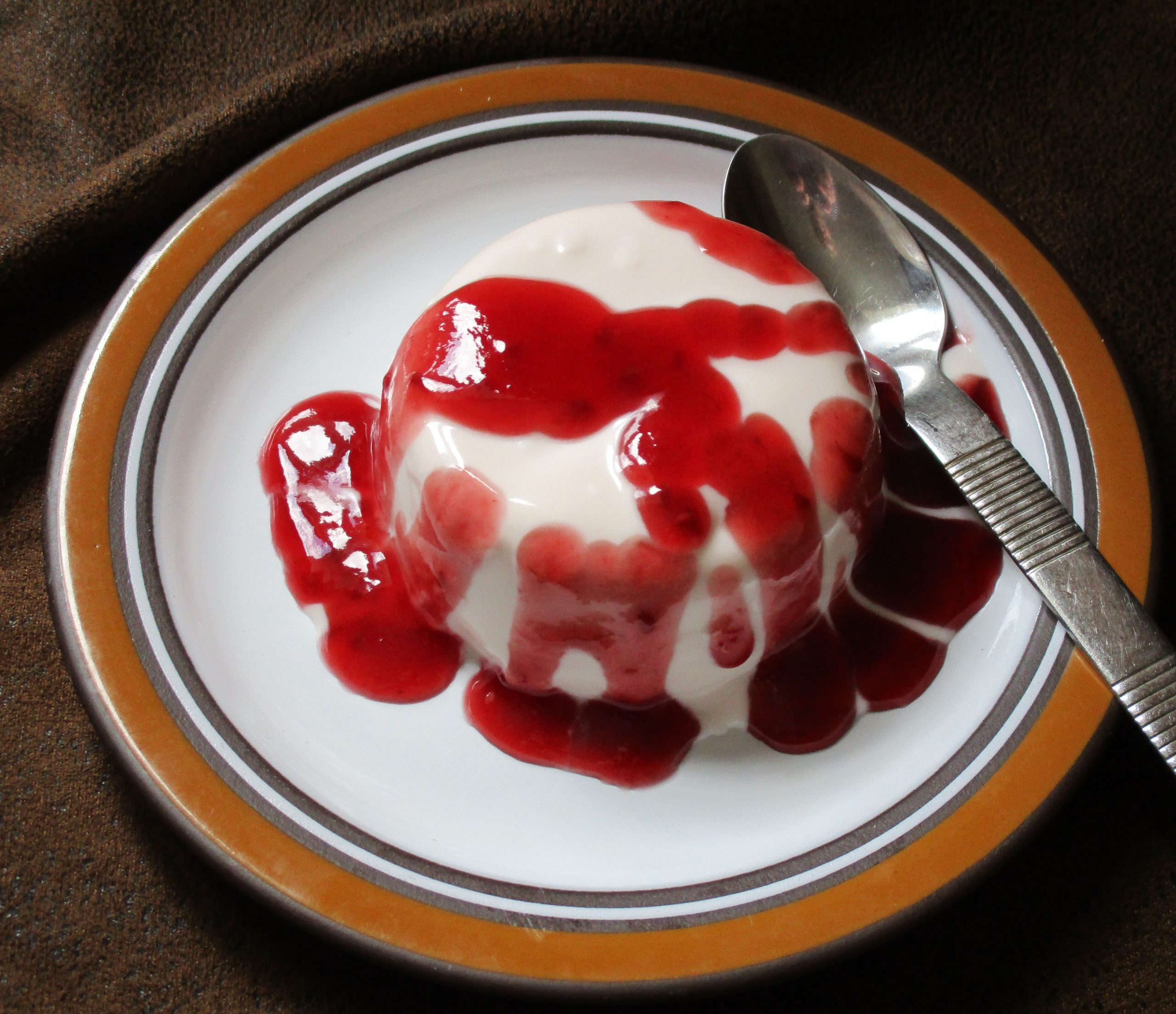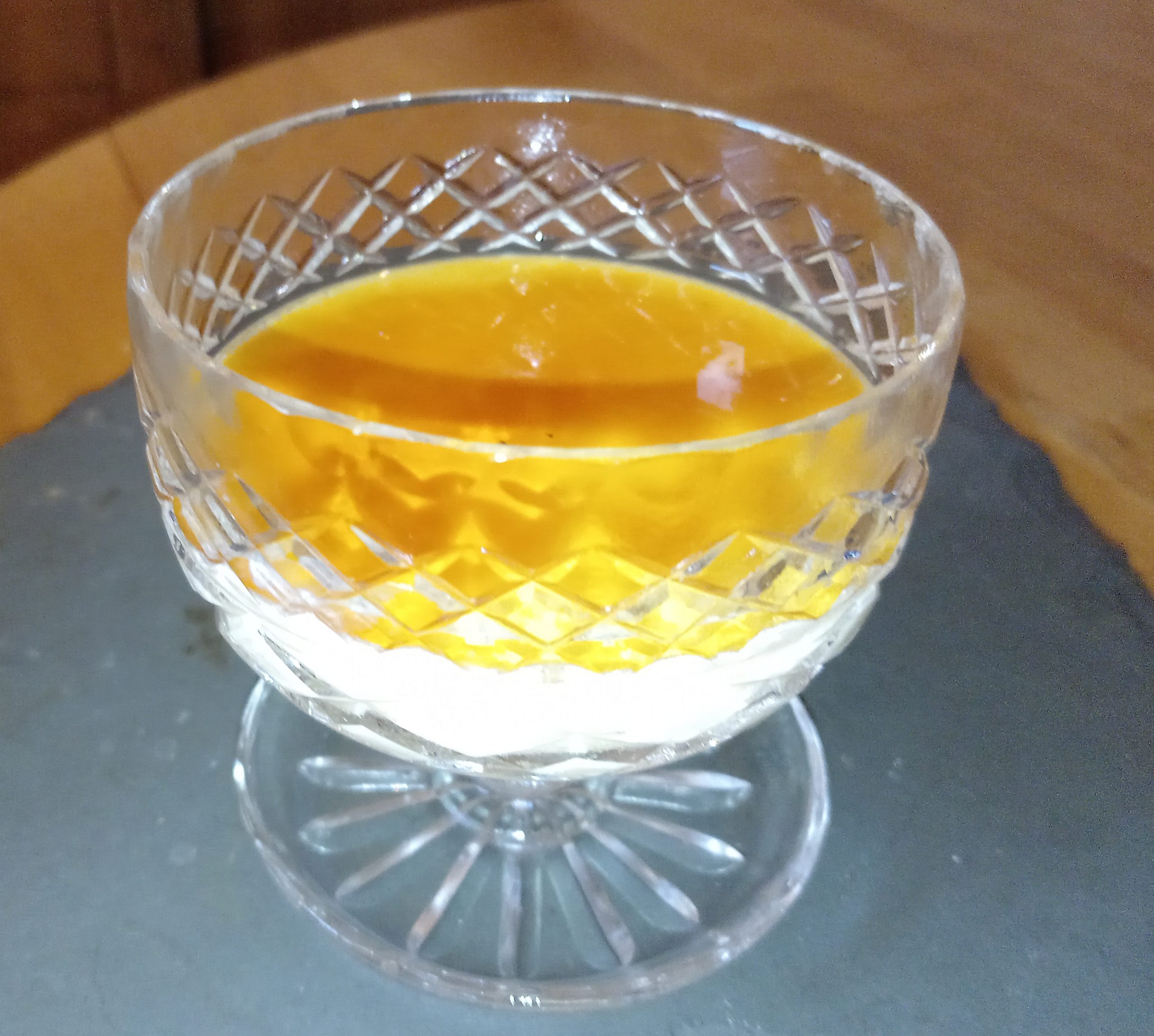
Rhubarb Jelly
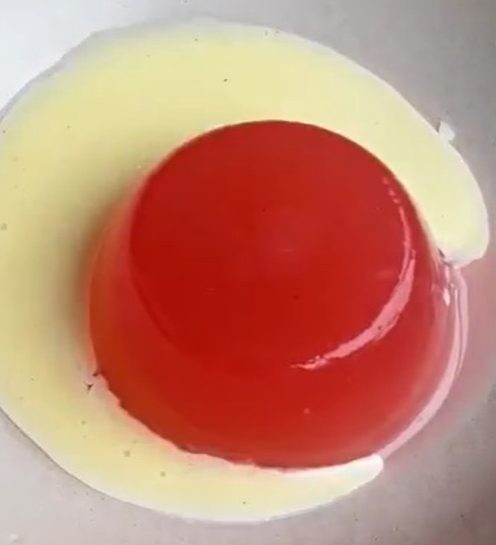
Serves 2. Prep 20 – 30 min. plus two hours to chill and set.
This light jelly has a slightly tart taste – great for eating after a spicy meal. If you want a sweeter one you simply add more sugar to suit your preference.
It is made with gelatine – I did not use a vegetarian one, but they are available. Cooking with gelatine is easy – read my recipe and always check the instructions on the pack.
Rinse any cooking utensils as you go along. This jelly can become rather sticky as the juice cools, so it makes life easier to clean as you go.
The Pan: Rhubarb has high acidity. When cooking rhubarb do not use aluminium, iron or copper pans. Rhubarb will react with these types of metals. The reaction will cause the rhubarb to turn a brownish colour and can cause the pan to discolour. It is best to use non-stick coated, anodised aluminium or enamelled cast iron pans.
The jelly can be stored in the fridge (I do not recommend freezing it).
INGREDIENTS
- 250g rhubarb (around 2 long stalks)
- 230ml water
- 35g sugar (I use caster – but essentially you want sugar that will dissolve easily)
- Leaf gelatine (I used Costa Fine Leaf Quick Dissolving. Powder is an option)
- NOTE: the amount used will depend on the volume of juice extracted from the rhubarb – see recipe below.
- Optional flavours:
- 4 tsp orange juice
- ½ tsp vanilla essence
- 1 tsp of chopped ginger
METHOD
- Chop the rhubarb into short lengths (1 cm is enough).
- Place the rhubarb, sugar and water (and any other flavours) into the pan (see the note above about the pan you should use).
- Give it a quick stir and bring it to a boil.
- Simmer for 8-10 minutes, or until the rhubarb is very soft.
- Strain the cooked rhubarb through a fine sieve set over a bowl. Use the back of a spoon to gently press down the rhubarb and extract more juice.
- NOTE: if you want clear jelly, line the sieve with a muslin cloth – I do not use one as I want to reduce the amount of washing I do after eating. I find cloudy jelly tastes just as good as clear jelly.
- Pour the collected rhubarb juice into a measuring jug and take note of the volume – you need this information to decide how much gelatine you need
- Soak the number of gelatine leaves required for the amount of liquid used in a bowl of cold water until softened – I soaked mine for 5 minutes NOTE: check the packet instructions for the correct amount of gelatine to use for the volume of rhubarb juice to achieve a soft jelly; the strength of gelatine brands varies.
- While the gelatine is soaking, place the rhubarb juice into a clean pan over low heat and warm through gently (but do not bring to the boil).
- After soaking the gelatine leaves, gently squeeze the excess moisture from them and add them to the pan of warm rhubarb juice, stir until dissolved.
- Pour the liquid jelly into either serving bowls, or molds. Leave to chill and set (this can take two hours).
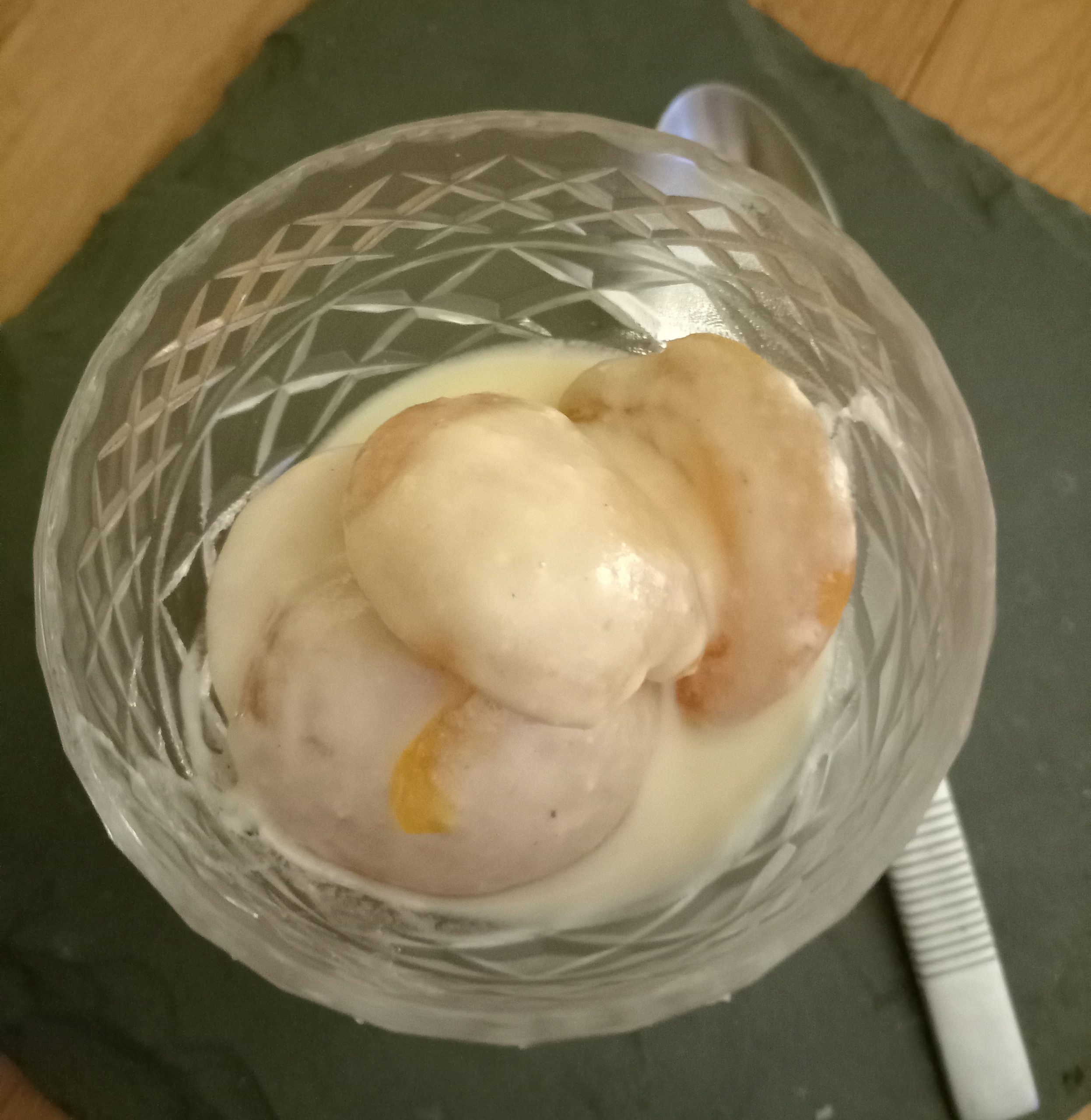
- SERVE with custard, ice cream or cream (optional).